Carmen Mariscal Jusqu’à la fins des temps
13 Apr - 31 May 2018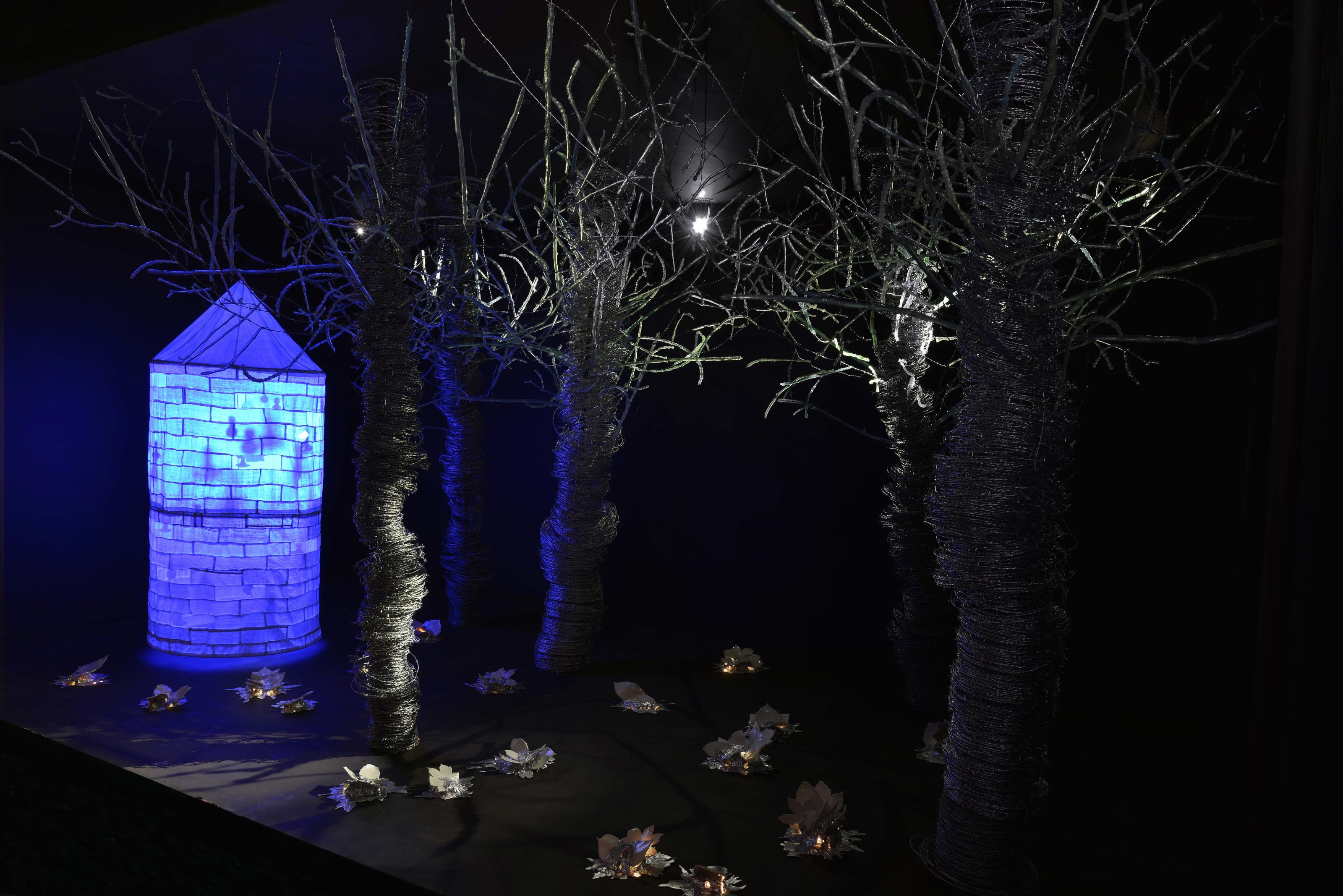
The installation The Beautiful Place by Carmen Mariscal (2014-2018) includes a variety of multisensorial elements that address the transformation of materials, in a complex construction that alludes to processes of memory, oblivion and repression, and their traces in objects and spaces, one of the main themes of Mariscal’s recent work.
The artist indicates: “We all go through life burdened by the power and weight of memories. My intention is to show the power that these memories wield over us, and to make visible these invisible memories.” The work was developed through a practice that is closed linked to Mariscal’s experiences over the last few years in theatre design and constitutes a symbolic evocation of a wooded area in the north of France that was probably occupied by the German army in 1940. A castle of sorts, a nineteenth-century house with a tower, is located there at the edge of a thick forest of tall, ancient trees that evokes the imaginary of fairy tales.
Mariscal uses elements originating in or found in situ at this suggestive scenariom —bedsheets, leaves, crystal decanter stoppers, etc.—to allude to the experiences of war that are imprinted on the spatial memory and the material culture of this place, experiences that have been repressed by the current inhabitants of the area and the descendants of the occupants of the “castle” in the last century.
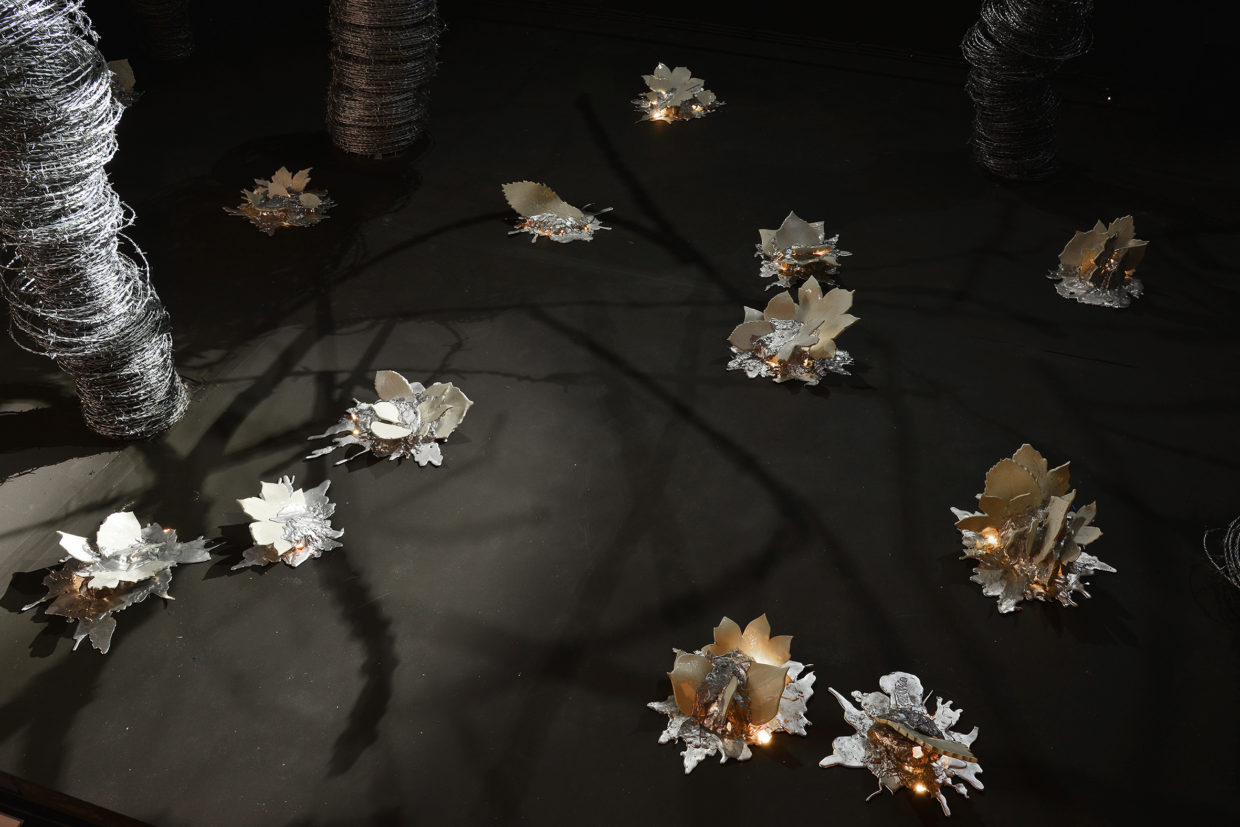
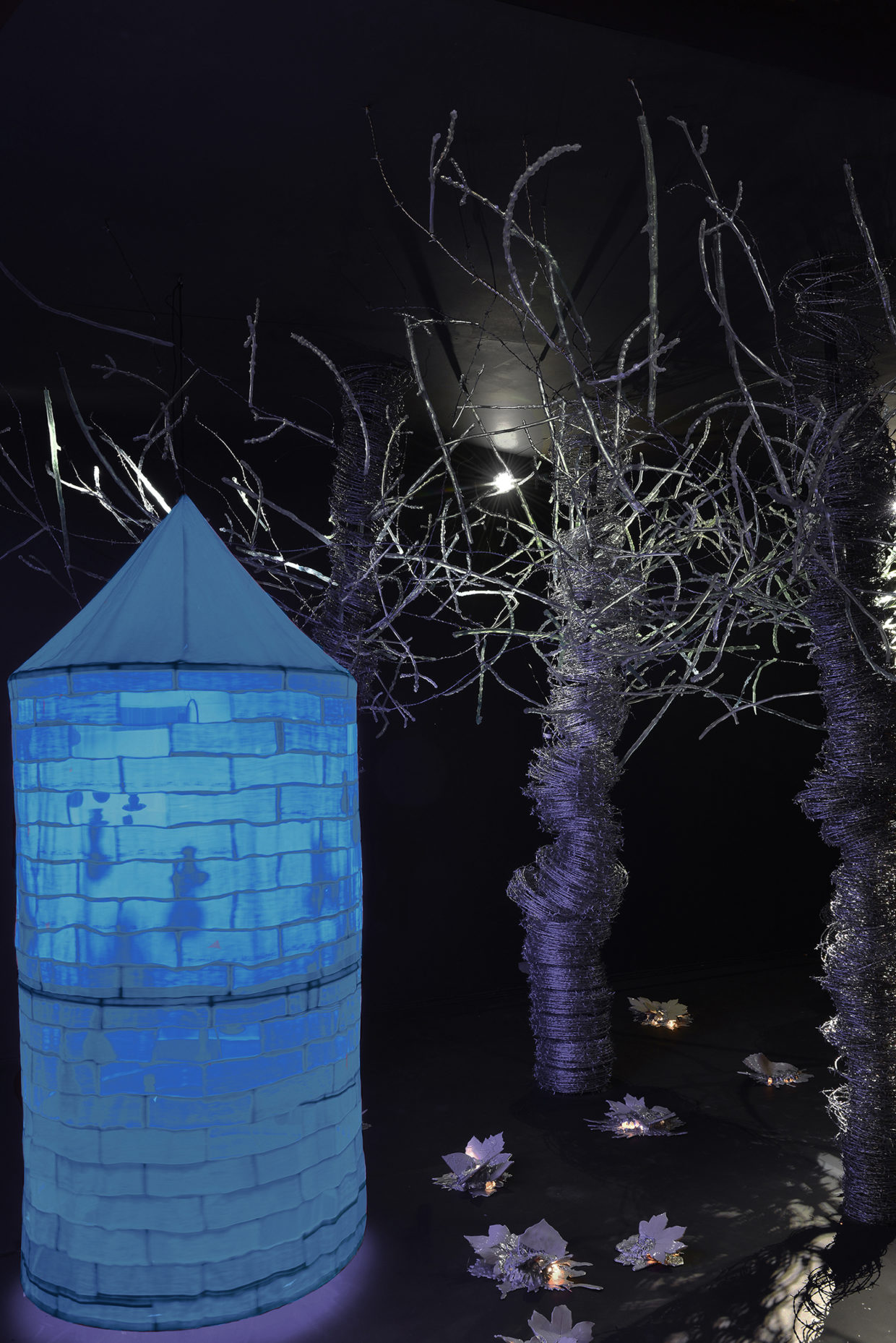
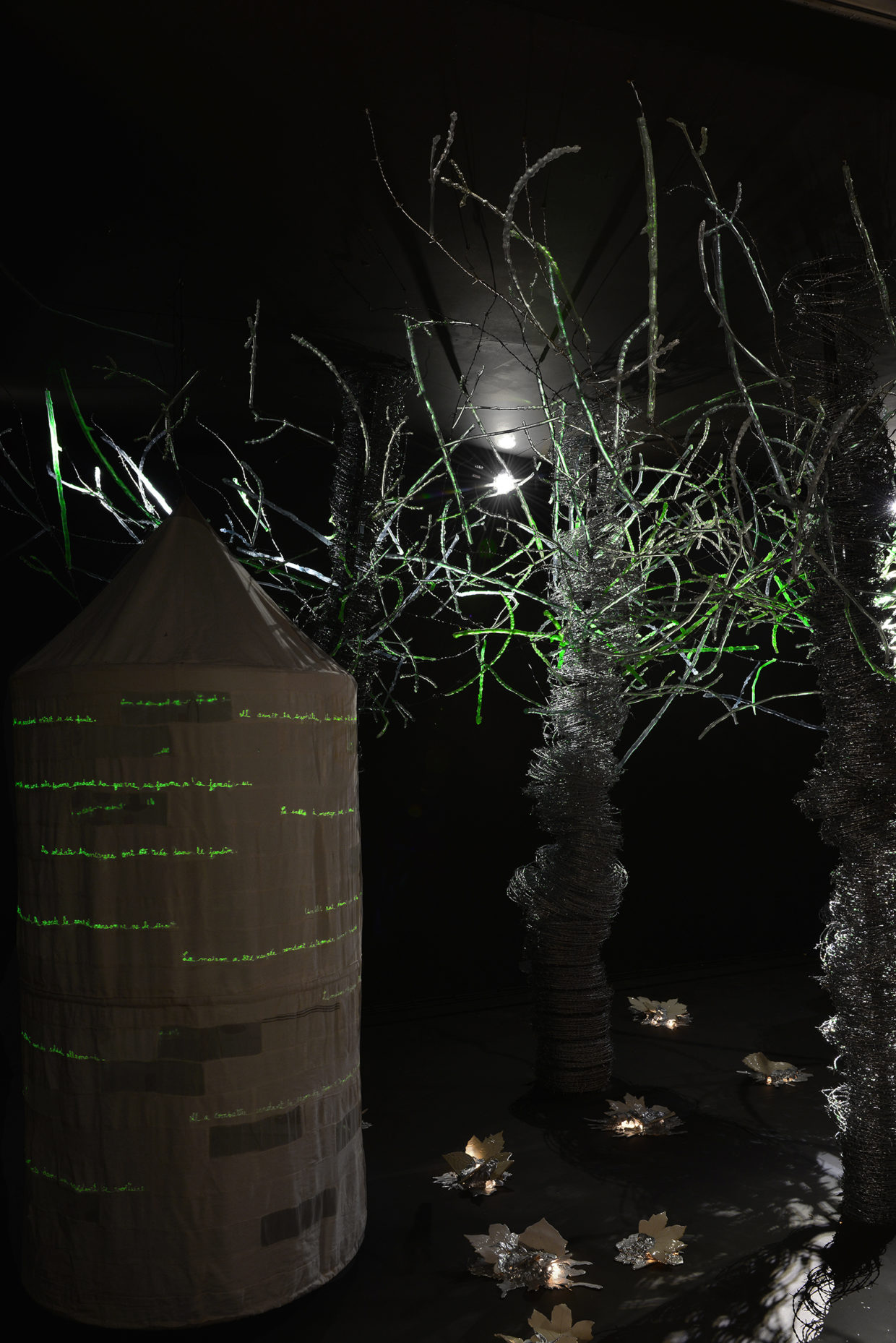
For example, she used the tattered bedsheets from the house to fashion a tower, embroidered with semi-legible sentences that refer to the secrets and contradictions that characterize the oral history regarding the site. In addition, she recreates the forest in her installation, constructing trees out of barbed wire and resin that embody a sense of foreboding and violence that has been shrouded in silence.
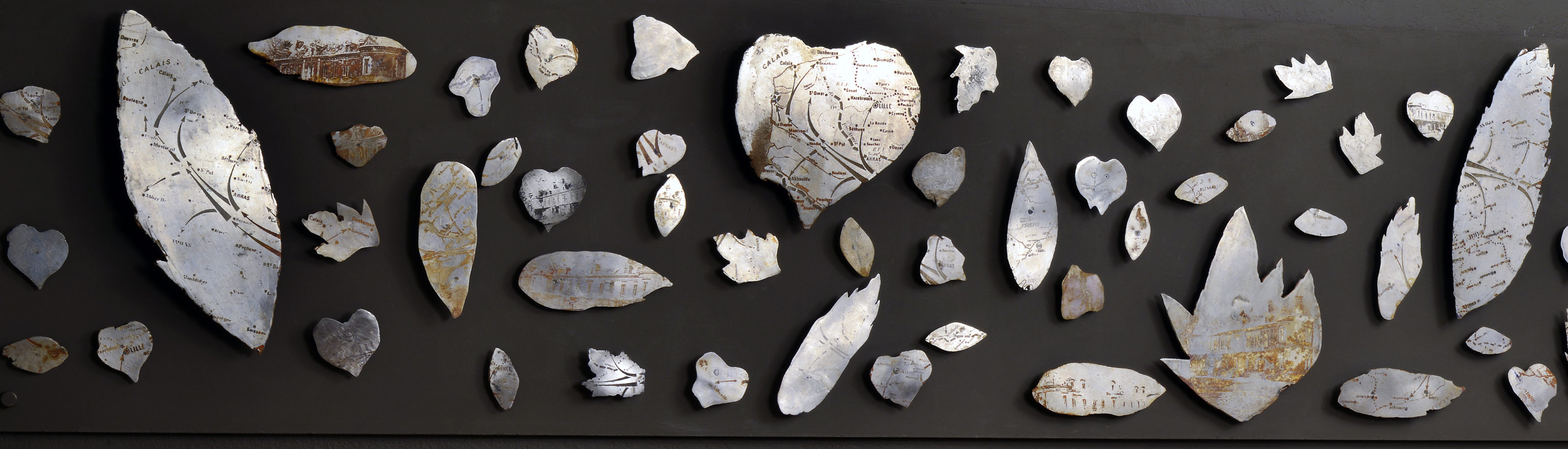
On the floor, leaves reproduced in clay and bathed in lead evoke both the fragility of memory and the harshness of the experiences lived in this “beautiful place” (the title The Beautiful Place refers to the French name of the mansion: Belloy–in ancient French–or Beau Lieu), while the sound installation echoes phrases that allude to the fragmented memories that the piece makes present.
Finally, cyanotypes reproduce the imprint of the leaves of the trees that witnessed a battle that took place on this site during World War II, in June 1940; they were created at the same hour and in the same place 75 years later and are displayed in light boxes as an insistent reminder –silent, subtle and gestural—of the trauma that has almost been erased from memory. In addition, an eloquent documentary film by Caroline Emmet-Bourgois invites us to observe the conceptual process of the piece and its production.
Karen Cordero