Quisqueya Henríquez El campo de lo posible
05 Mar - 20 May 2020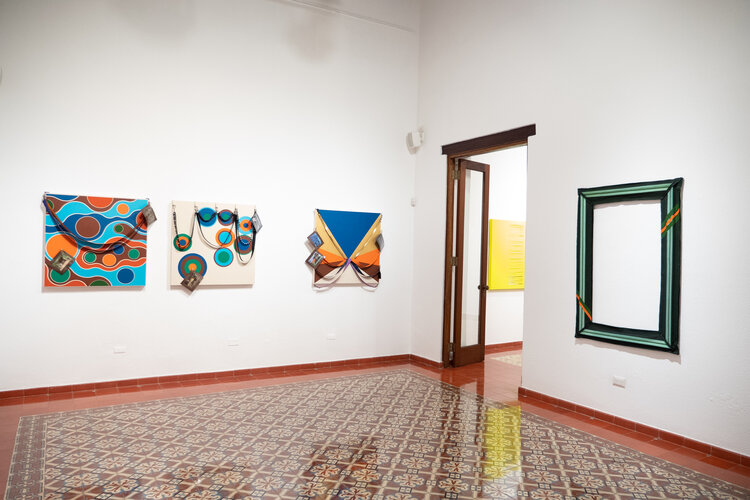
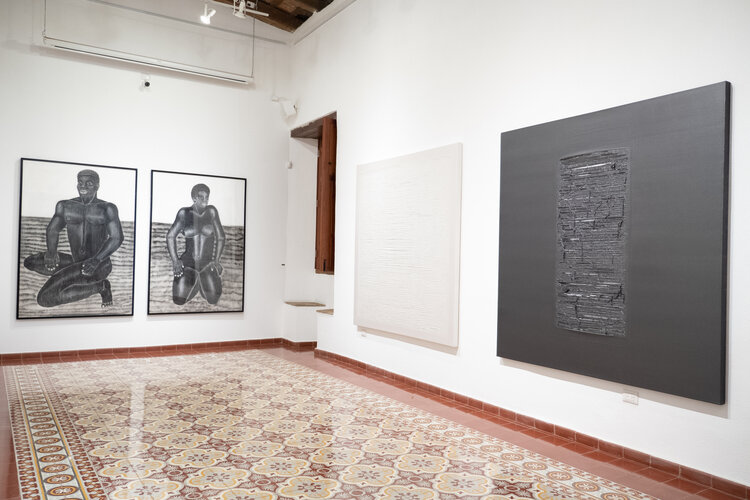
The field of the possible is an exhibition made up of works carried out between 2018 and the present. The exhibition extends to all museum spaces, including rooms that are permanently dedicated exclusively to the work of Fernando Peña Defilló (FPD).
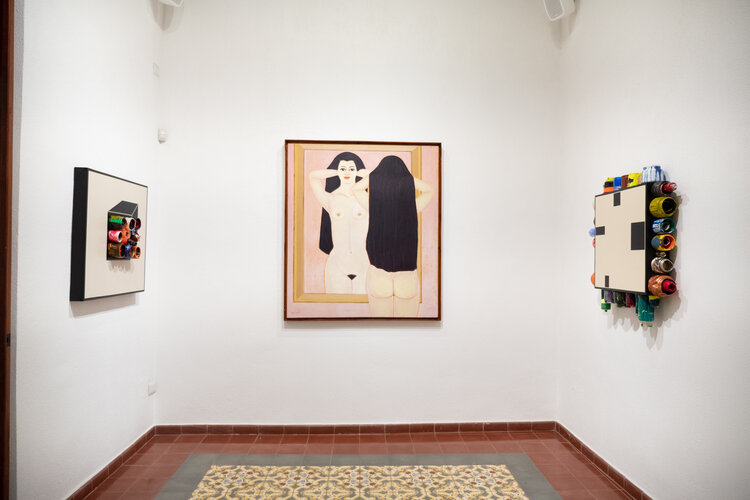
A section of the exhibition exhibits a group of my works together with others of his. Motivation is a shy attempt to see some of his pieces again, at the same time that they dialogue with mine.
Family circumstances made me meet FPD during my childhood. He is also one of the Dominican artists that I always remember from my time as a guide of the Museum of Modern Art at 17 years old. A brief history in common unites us, from which it becomes natural for me to exhibit our works together.
With the pieces I have selected from FPD, I am interested in stimulating a broader reading of works that were made between the end of the 20th century and the beginning of the 21st. I am attracted to inquire about the implications that art that occurs in the convulsion of a change of ages and, without doubt, of paradigms, may have.
Problematize the imaginary
In one case, for example, the question arises as to what it meant for him to depart from the canon by representing the bodies of the biblical disobedient as black, when historically western iconography has represented them as white.
In another daring and problematizing gesture in the context of his social environment, Papo (nickname of Fernando Peña Defilló) reassigns gender to the names of Adam and Eve, introducing a witty wink in relation to the socio-cultural construction in which the designation of proper name to a person, adding with this modification a shrewd comment, perhaps without fully warning it, about the deconstruction of sex and the body and their cultural mutability.
Adana and Evo, 1997, provokes a current look from the Dominican context on issues related to the spectrum of gender and race identities, individual liberties and respect for racial diversity. Finding the complexity of these themes in this work seduced me to develop the project.
Converge even if you diverge
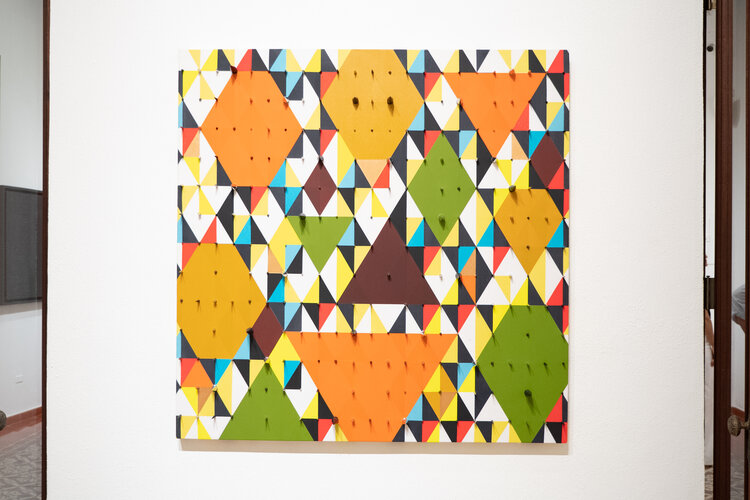
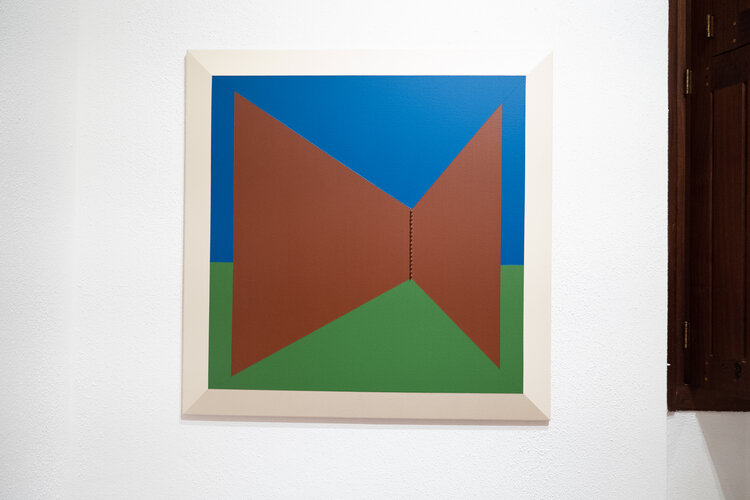
FPD was primarily a painter. Although our languages do not always coincide, the exhibition technically revolves around painting. My skepticism with the pictorial medium after graduating from that specialty, has mutated into new impulses. I use his own “expansion” to put aside my denial and use this medium at the same time that I provoke it. Focused on the potential dynamics of the surface, I remove and add to it with a certain craving and experimentation. The formal investigations in these works focus on the challenge of the field of the possible and without limits of the pictorial, while also exploring other languages such as sculpture and photography.
A space event in painting
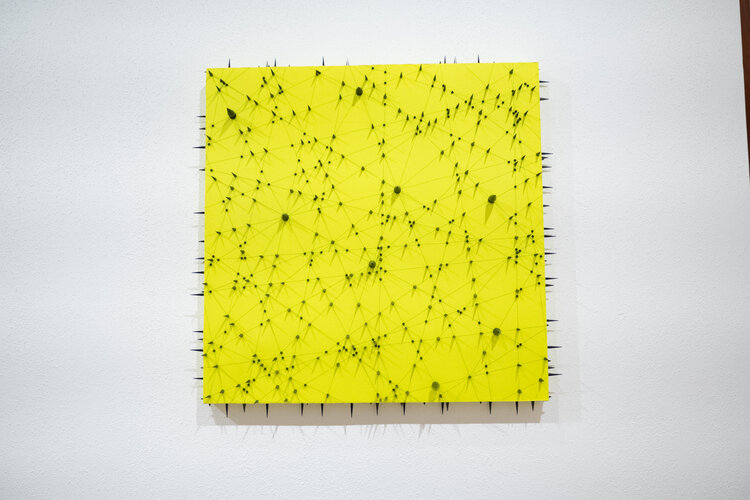
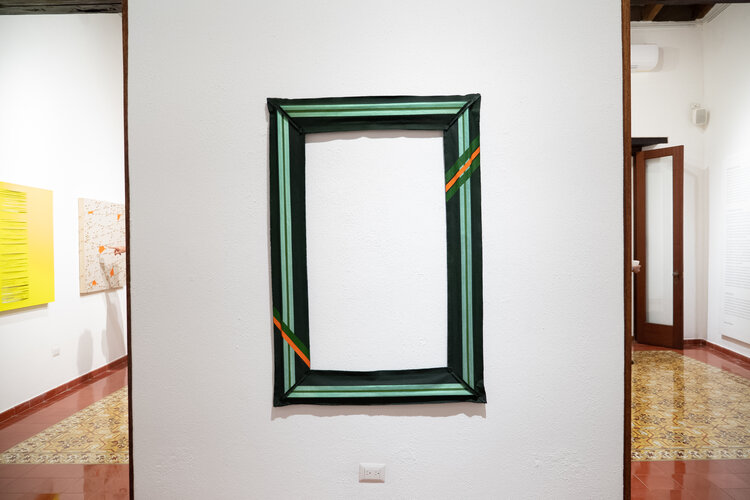
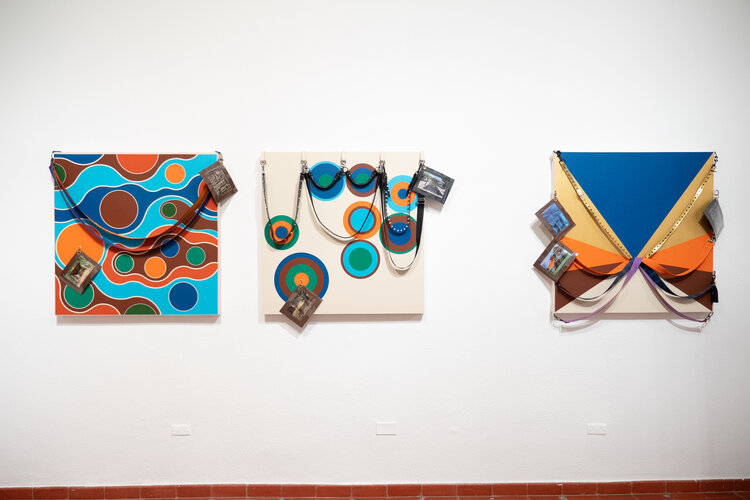
Two of the series that I have recently developed, Unexpected Surfaces (puyas and family) and Ripped Paintings (torn fabrics), are based on bringing to the field of art elements related to fashion, consumption and popular culture.
The reformulation of cultural identity, the constant transfer from the local to the global and vice versa, or how the social discourse of fashion has permeated the production of content in contemporary art, are some aspects that I have been incorporating into my works.
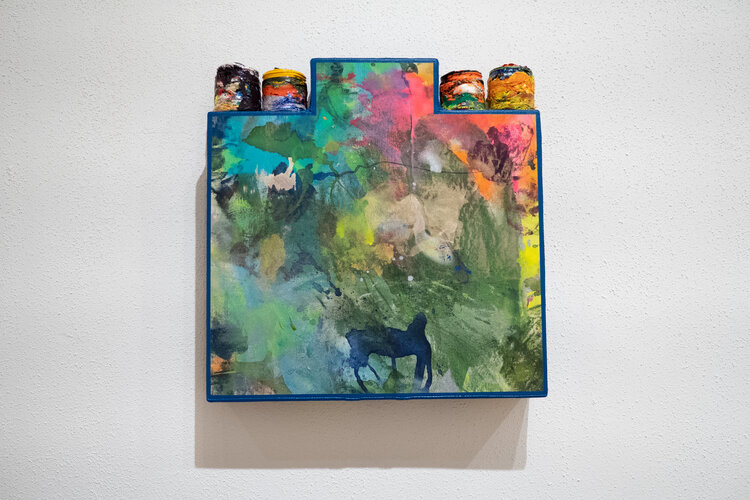
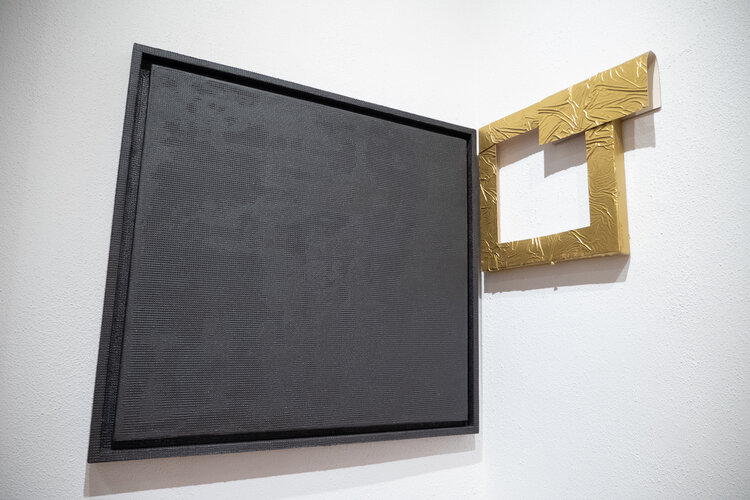
The Intended Effect series has been shaped over several years, using the waste from used paint to make other works. Waste reused and incorporated into painted structures that accommodate or discomfort their shapes and dimensions. The albur and the accident characterize these pieces in the way in which
Color mixtures and the alteration of the silhouettes arise, at the same time that reflection on the dangerous relationship between what we consume and how we dispose of it appears.
Together with the account of everyday life and narratives about consumer culture, these works delve into the field of formal abstraction and the interest in making way for three-dimensional components in the process of pictorial construction. These aspects, as well as others related to cultural material, have defined my interests as an artist in the way I perceive and nurture myself in relation to my artistic practice and the History of Art.
Strange devotion
The History of Western Art is a structural inspiration in my career that frames my practice in the constant need I have to insinuate myself, especially with its most radical moments. There are not a few works that I have done in complicity with another work that has changed the dominant story or that bet on the alteration of the artistic canon. The field of the possible is configured in this constant.
Quisqueya Henríquez