Carmen Mariscal La esposa esposada (l’épouse menottée)
12 Oct - 20 Dec 2018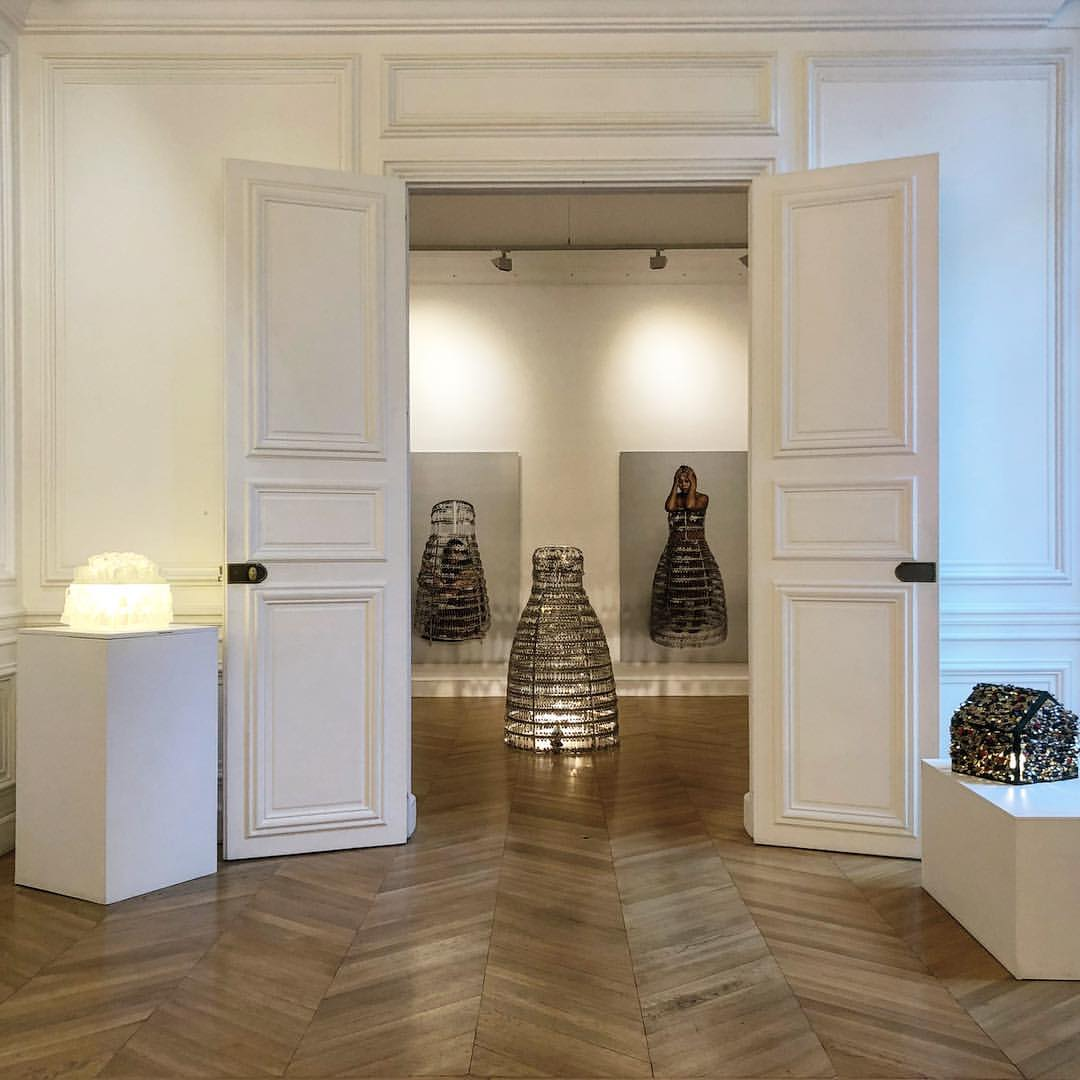
The first exhibition of the Mexican artist Carmen Mariscal (Palo Alto, California, 1968) at the Maison de l’Amérique Latine (Paris) is part of the thread of concerns that, for years, have reinforced the position of a sensitive woman artist committed to the multiple paths of a feminine cause that she approaches with a gentle radicalism. Family memories and personal life, and social awareness resulting from a reflection in direct contact with the present, are some of the sources that fully irrigate her work and support her narrative. […]It is with this spirit that Carmen Mariscal chose the condition of women as wife and mother as the reflective axis of her creative work. […]
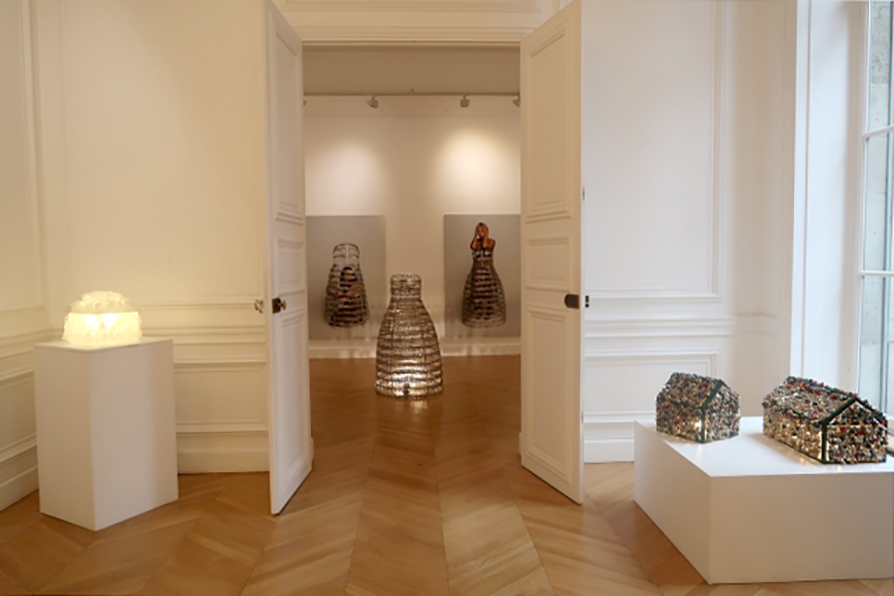
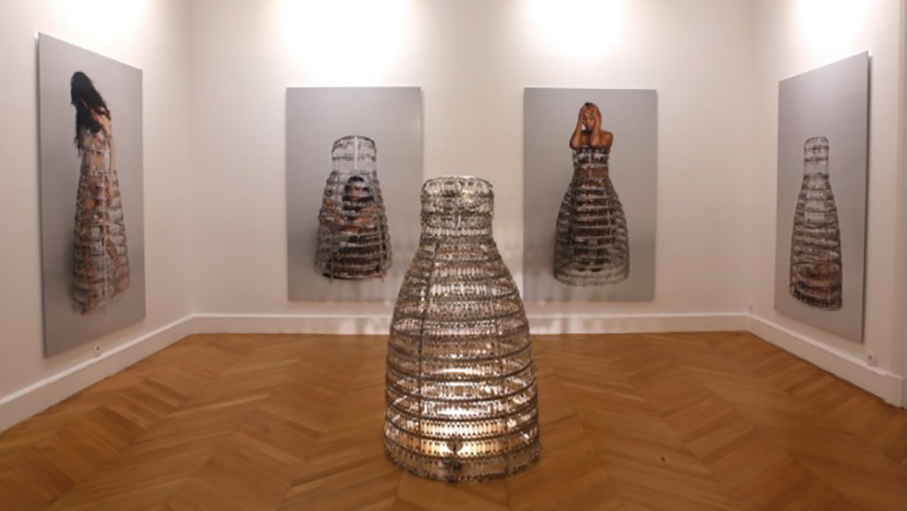
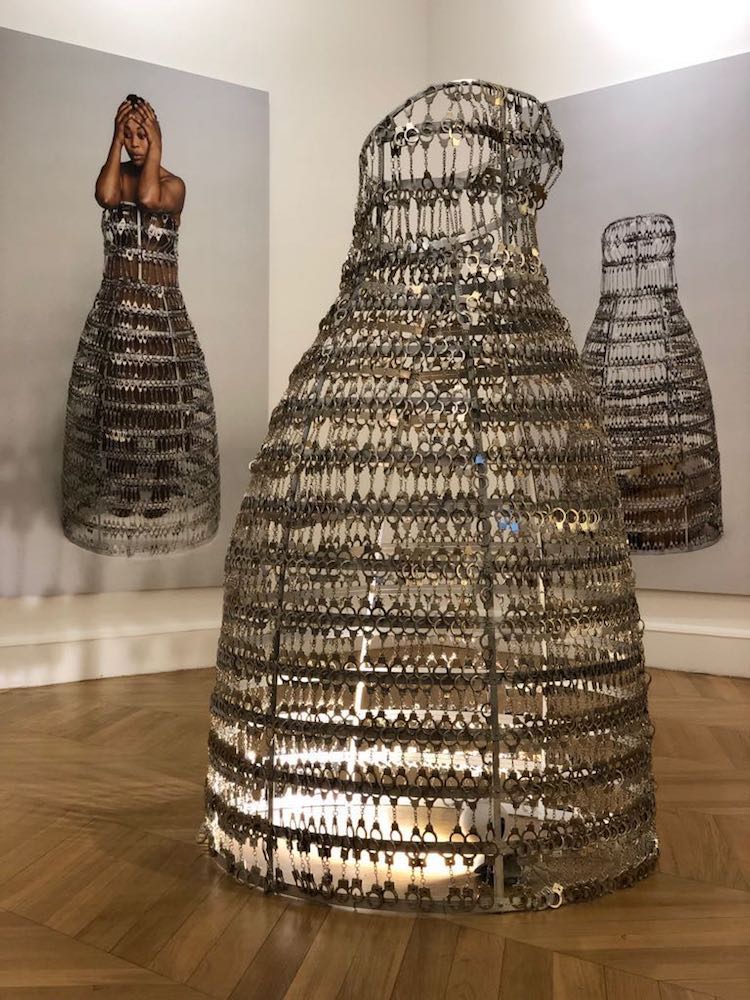
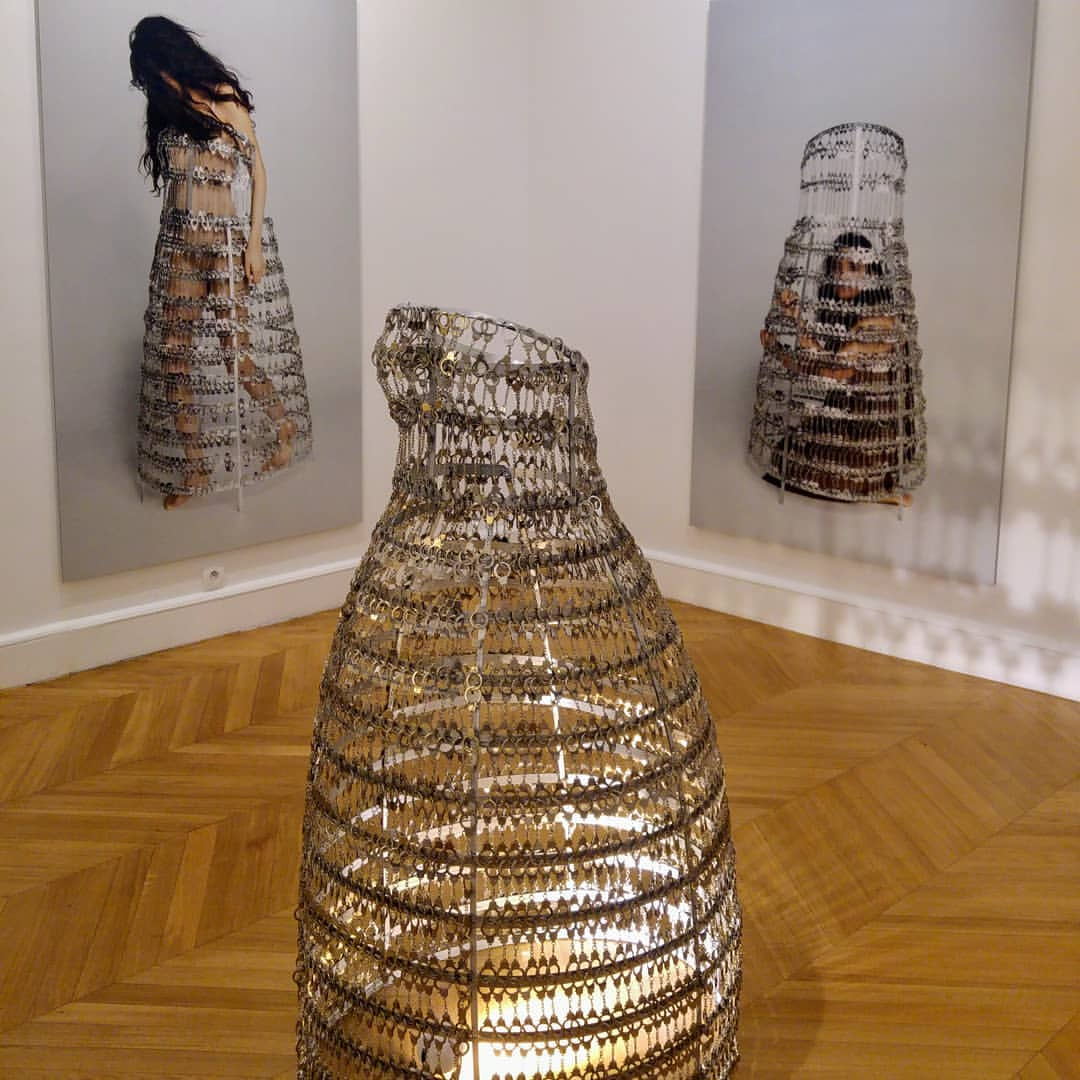
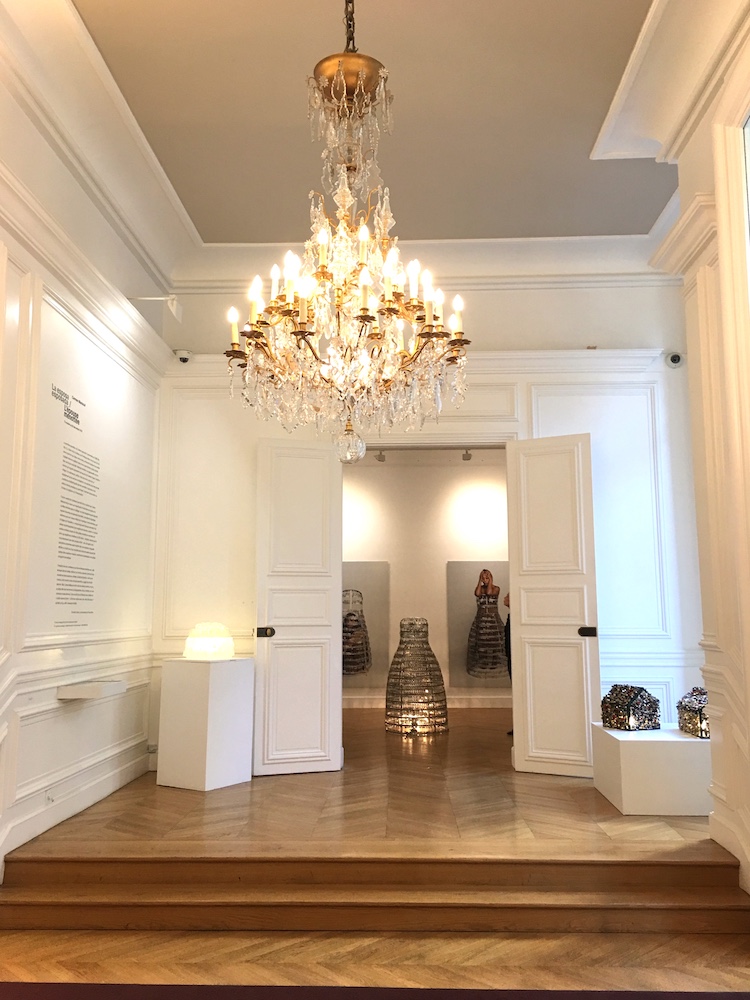
Starting from the individual and moving towards the collective, Carmen Mariscal conceives her latest installation portraying her concern, both intimate and social, for the condition of women in marriage. The linguistic coincidence that the Spanish words “esposas” (wife), “esposas” (wives) and “esposada” (cuffed) conform, is welcome for the intellectual purpose of her claimed of her as a feminist, and are at the origin of the installation La esposa esposada (The cuffed wife). To photograph about twenty women “wearing” a wedding dress made up of more than a thousand small steel handcuffs with a shape reminiscent of 19th century crinolines, true shackles for the body imprisoned in iron rings, the artist appealed to several associations of women who have suffered difficult marital situations or forced exile.
The six photographs chosen for the exhibition represent women in different body attitudes, faces whose gaze interrogates us, faces hidden (by hair) or that turn away, mirrored faces in which to recognize ourselves, the bust and the rest of the body while remaining “imprisoned”. What the artist wanted to privilege in each photograph is the type of relationship that the woman establishes with the dress, the emotions, thoughts, affections and disorders that go through her when she is a bit like a “caged bird”; To prevent the rigidity of this voluntary and temporary “confinement” from imposing the same attitude on all women, it allowed them (relative) freedom of movement, the limited space they had only allowed them to free their arms.
The challenge for these women was to reproduce an unfortunate situation, even if it was virtual; remember the prison that was the arranged marriage, even forced, the motherhood suffered, the tear of the exile, so many different situations and reactions that could arouse in pain the physical confrontation with the asperities as material as symbolic of this wedding dress-armor, not to protect himself from it, but to free himself from it. […]
Sound fragments of interwoven stories where the past is always present in the memory of some of these women constitute the soundtrack that accompanies the installation; and it reminds us of the extent to which this tragic and inevitable fate is shared by so many women around the world. […]
Christine Frérot, curator