Soledad Sevilla Mi propio paisaje
04 Feb - 28 May 2023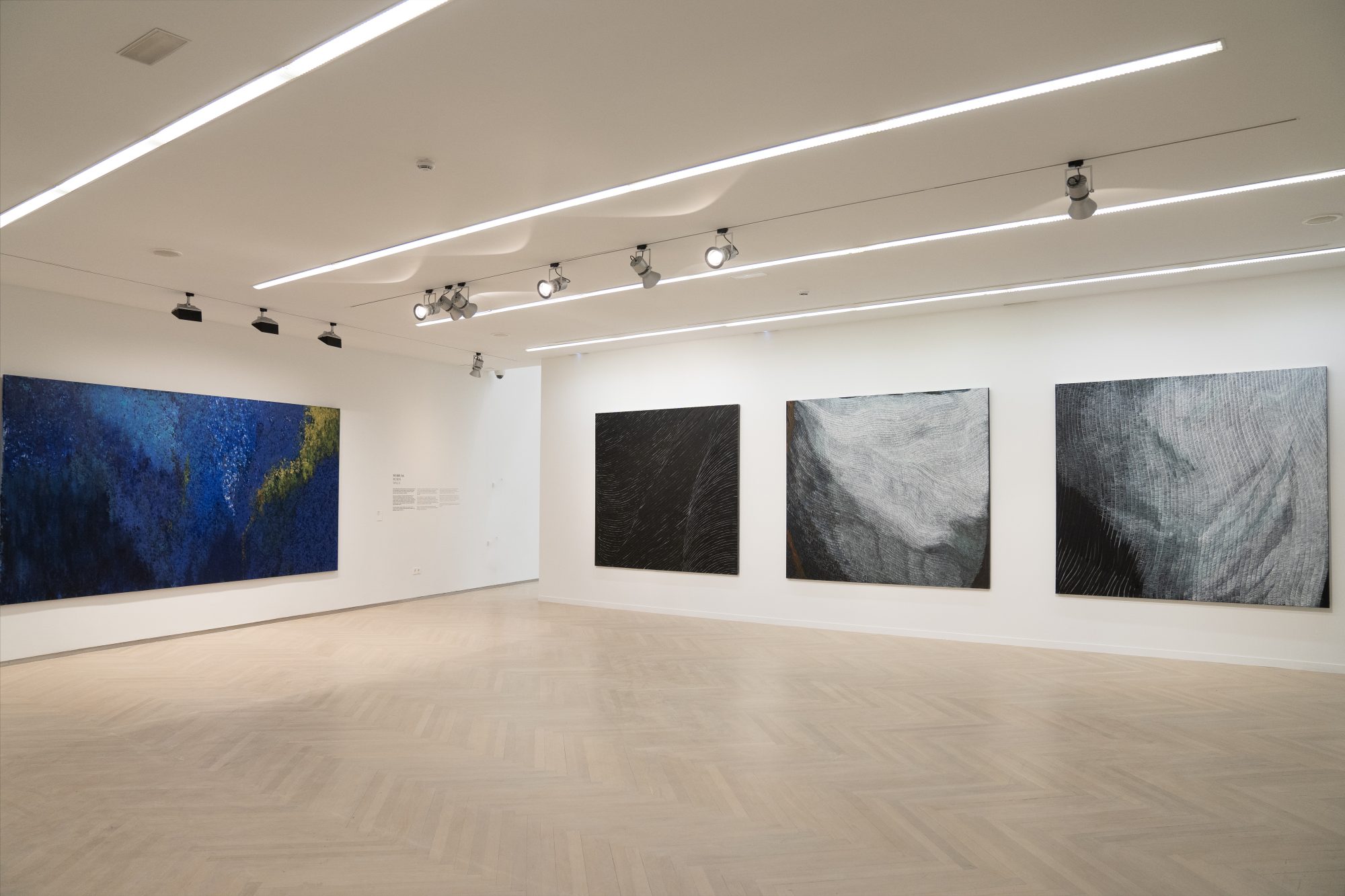
‘Mi propio paisaje’ [My Own Landscape] is an exhibition set out as an immersion into the world created by the artist, who understands painting as a life attitude, presenting us with her ordered, light, pure and frank landscapes based on an extensive enquiry into geometry, space and light.
The exhibition has been specifically designed by Soledad Sevilla for the Kubo Kutxa gallery, inspired by the suggestive space in which it is installed. It takes its title from a line by Pessoa, “I am my own landscape”, and it focuses on four vital stages in her career:
Nada temas [Nothing to Fear]
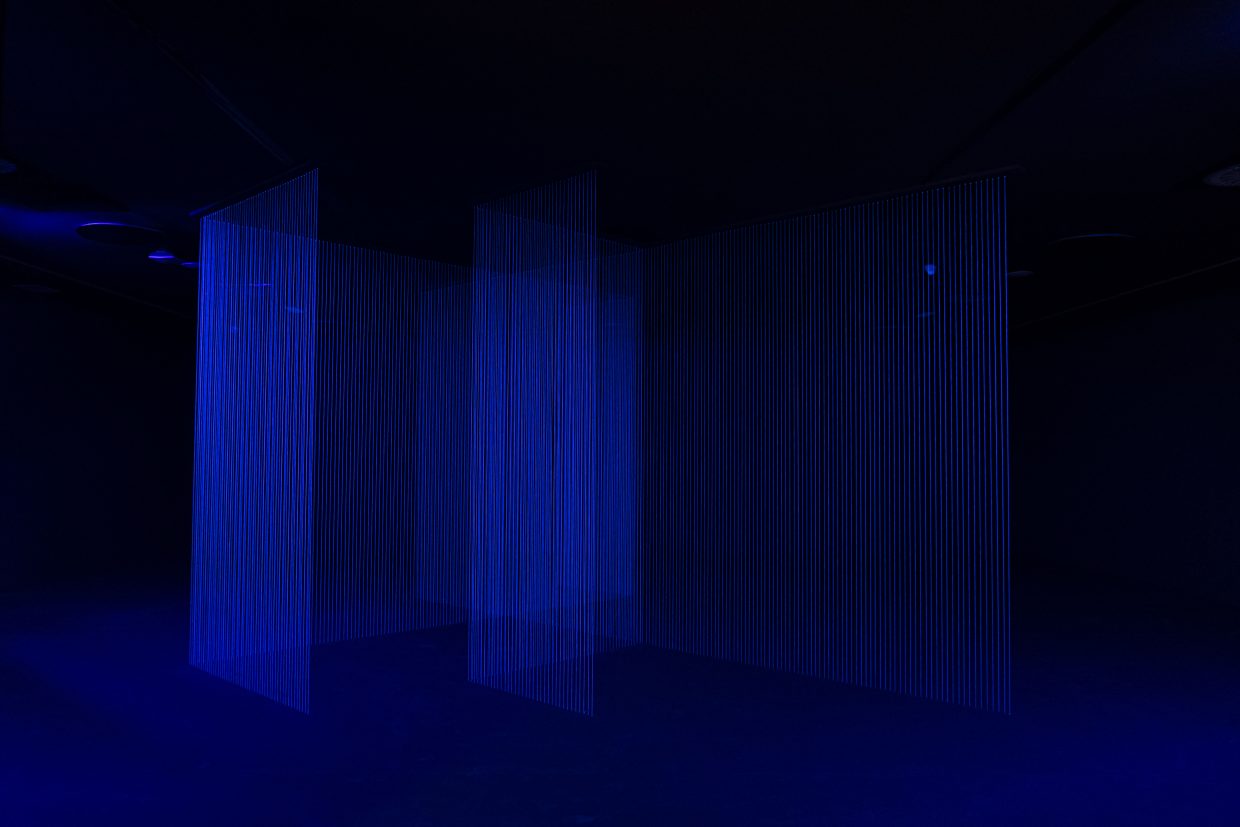
Soledad Sevilla has created an installation work especially for this exhibition entitled Nada temas (2023), based on a line taken from the poem Nada te turbe [Let Nothing Disturb You] by Saint Teresa de Avila. It is a fleeting, fragile installation creation that carries her concerns about line and plane over into architecture. She outlines the depth and volume of the structure she draws in space with traces of light, which are actually simple cotton threads installed rhythmically and geometrically across the void, weaving the air to create an atmosphere of sublime spirituality. As the title suggests, art has the ability to reveal mystical truths.
Plot permutations and variations
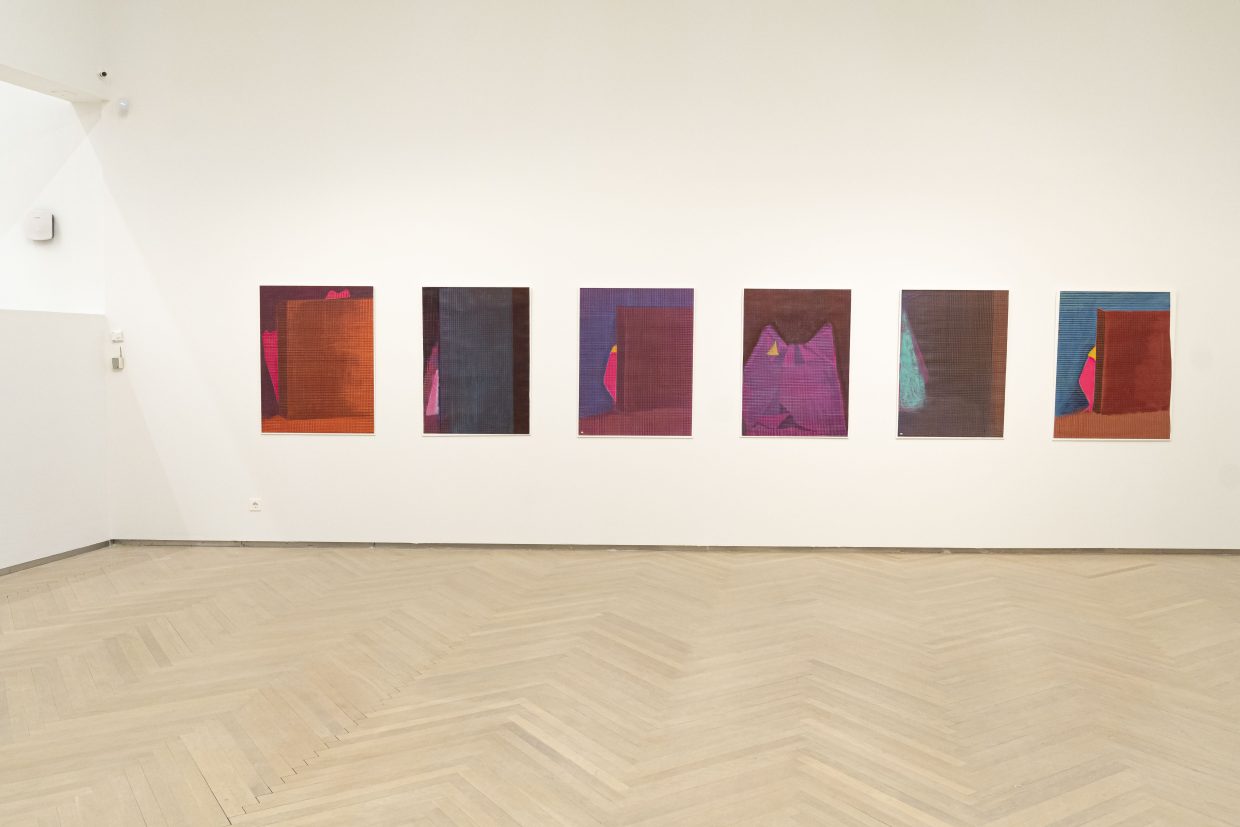
The purest geometric abstraction, serial drawings from the outset of her career, in which she created purified, fictitious spaces by repetitively using line to produce an emotional experience of quasi-mystical serenity. These works were produced in the 1970s and 1980s on rolls of continuous paper, creating these endless geometric structures. Some of these works, in many cases unpublished, were produced during her time in Boston and can be seen in this exhibition.
Agricultural architectures
The observation of nature is the source of inspiration for the series in the large central gallery space.
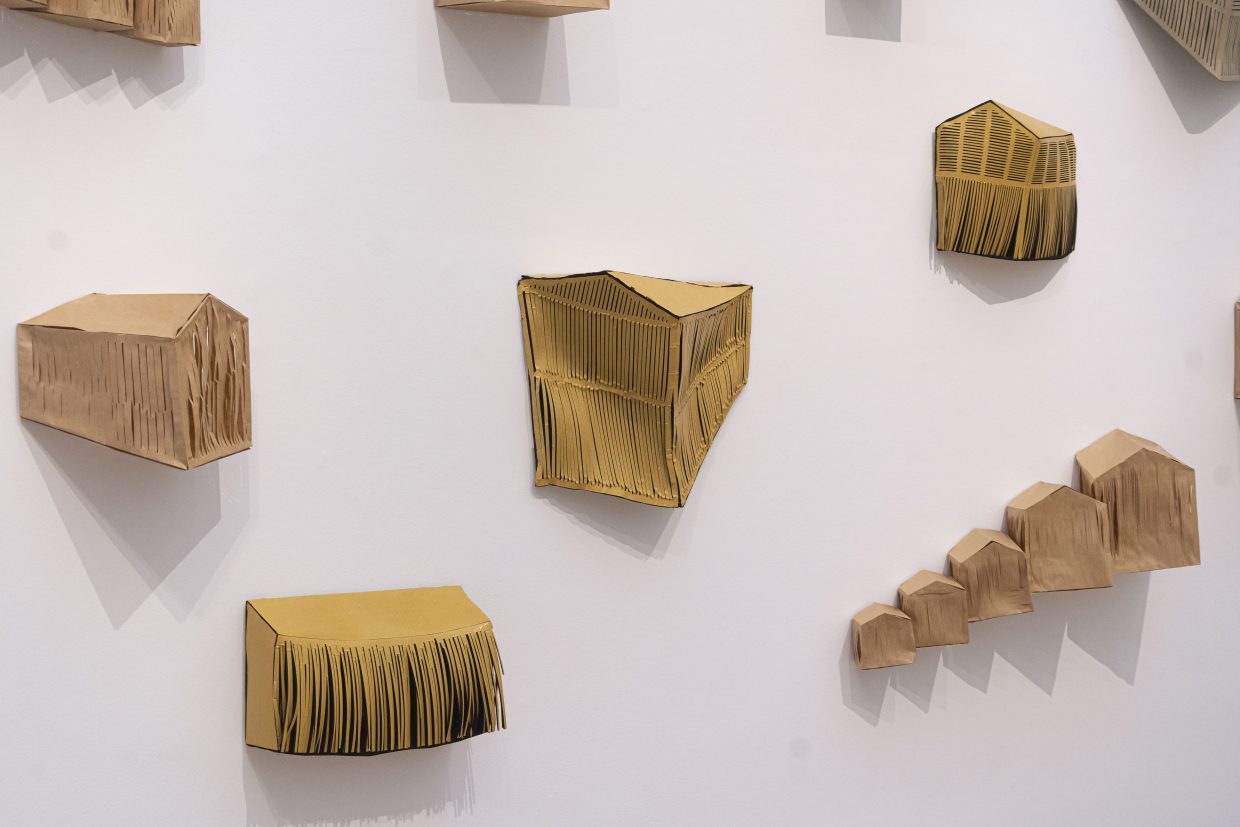
Arquitecturas agrícolas [Agricultural Architectures] is inspired by the landscape of La Vega in Granada, specifically by the tobacco drying sheds scattered throughout this county. These are traditional, quite rudimentary rural constructions in which tobacco plants and leaves were usually hung to protect them from the sun and rain, while simultaneously facilitating ventilation during the drying process. The artist evokes and poetically reproduces these constructions in malleable materials such as metal, neoprene or paper, creating plays of light such as those produced when entering these humble constructions.
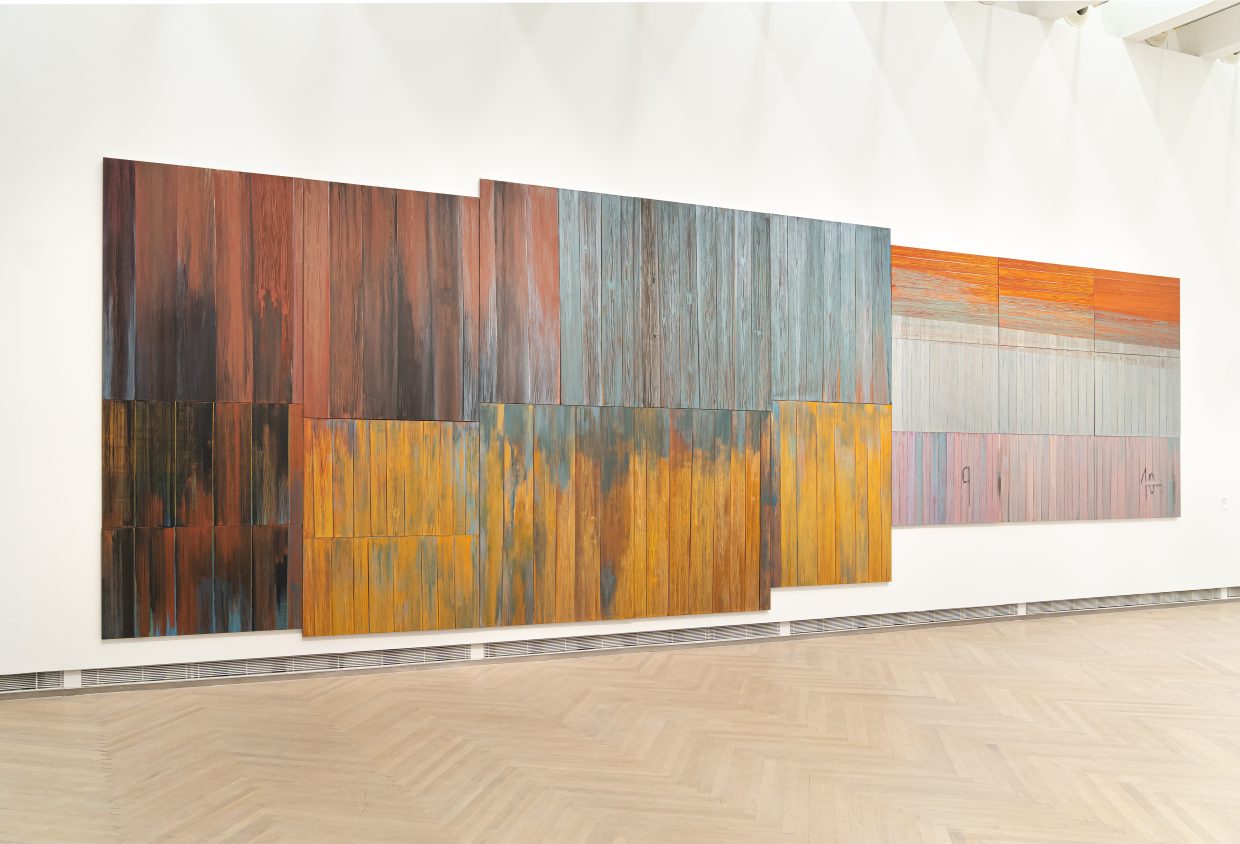
Retablos [Altarpieces]. Soledad Sevilla also rescues these tobacco drying sheds, constructions that are slowly disappearing, so that they can survive in our memory. Her Retablos, paintings that recreate the rhythm and textures of fence-like boards, inviting us to walk around them while stopping to look at their details, are inspired by this vernacular architecture, by the rickety wood that remains of these architectures of agro-industrial origin. The intervention in this gallery space, consisting of Retablo A, Retablo B and Sonata sin futuro [Sonata with No Future], is arranged like a modern altarpiece, an installation, a chapel in which the paintings form a majestic, spiritual space that surrounds us, welcomes us and overwhelms us. She manages to trigger a transcendent experience.
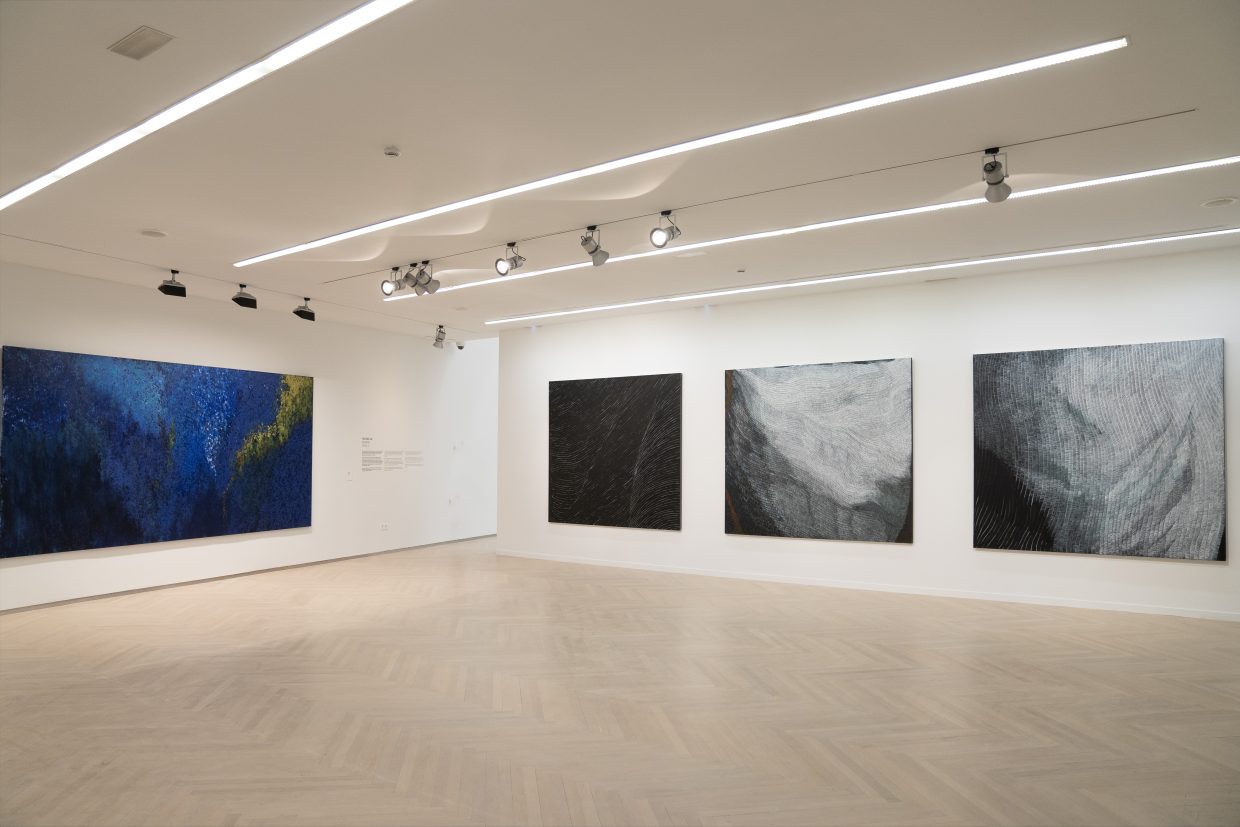
Arpilleras [Hessian]. She now focuses on a more humble, fragile and ephemeral element: the hessian that covers these constructions, isolating and protecting the plants from inclement weather. This material can be found in works such as Nuevas lejanías negro [New Black Horizons], Las lunas oscuras de cristal [The Dark Moons of Glass] and Las lunas oscuras de plata [The Dark Moons of Silver], as well as in the Silencio [Silence] series. She is interested in the airiness of these fabrics, the light they filter, the diffused landscape they offer through them
Muros [Walls]
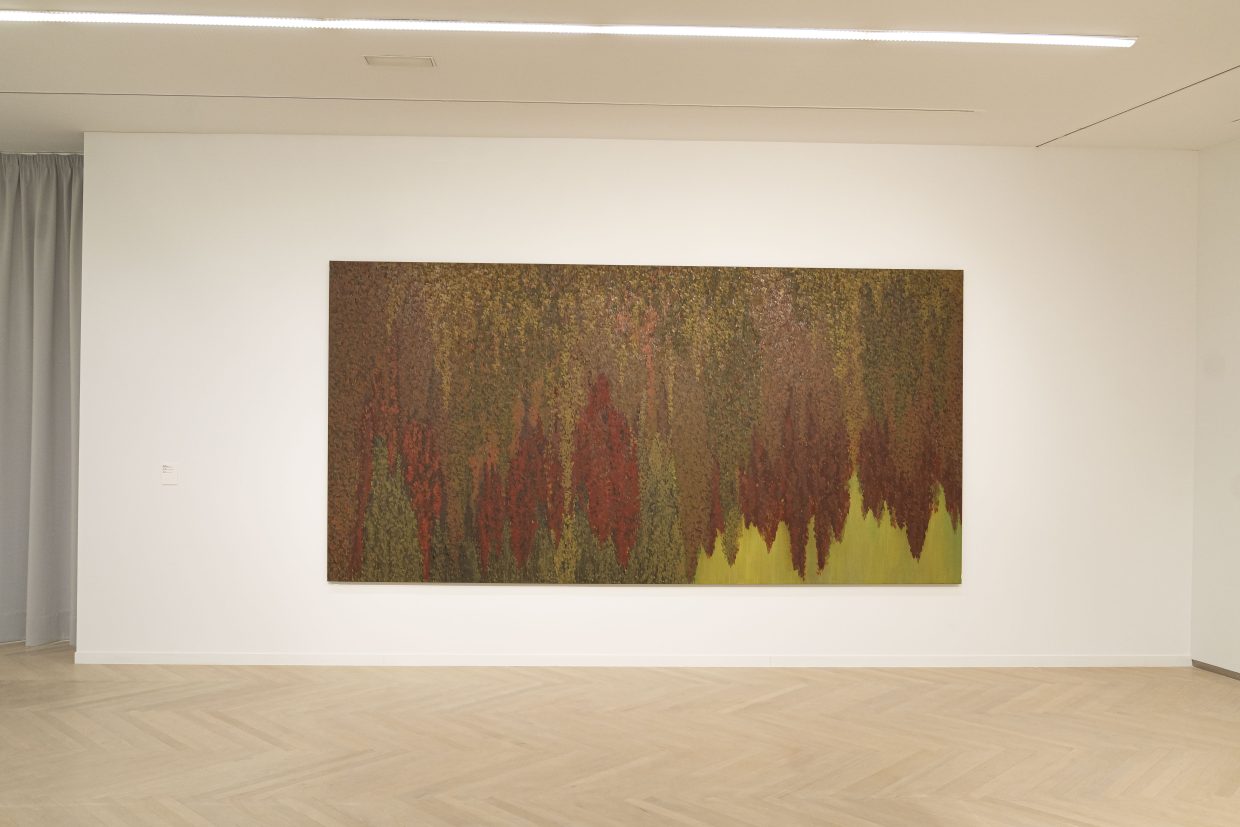
From the purest geometric abstraction, we traverse in her Muros to the most lyrical abstraction, works in which the geometric and organic converge. They are works in which gestures are evident and brushstroke rhythms appear, how the leaves of the climbing plants that envelop the walls of Carrera del Darro in Granada follow one after the other and accumulate. These —Sica (1997) and Sal [Salt] (1998)— are works inspired by the world of plants, opening up a connection with a nature that is sometimes expressed, although often framed in elements highlighting the strength of the poetry exuded by Soledad Sevilla’s creations: huge paintings made up of leaves that could be the fragment of an endless vine, leaves of different shades and subtle variations evoking the passing of time, the fleetingness of matter, the fragile permanence of things and of life itself. The artist is ultimately fascinated by what is fleeting.
Lola Durán Úcar, curator of the exhibition